When an injury occurs, whether it's a sprain, fracture, or strain, one of the first steps in treatment often involves immobilization. A medical splint serves this critical purpose by stabilizing the injured area, reducing pain, and creating the conditions necessary for proper healing. Understanding how splints work, when they're needed, and what types are available can help you make informed decisions about injury care and recovery.
This guide explains the fundamentals of medical splints, their benefits, and how to know when using one is appropriate.
What Is a Medical Splint?
A medical splint is a supportive device designed to immobilize and protect an injured body part. Unlike casts, which are typically rigid and wrap completely around a limb, splints are often adjustable and allow for some swelling. They can be made from various materials including metal, plastic, foam, or rigid fabric, and are usually secured with straps, velcro, or elastic bandages.
The primary function of a splint for injury support is to keep the affected area still, which prevents further damage, reduces pain, and promotes healing. By limiting movement, splints help bones, ligaments, tendons, and muscles recover in the proper position.
How Does a Medical Splint Work?
Medical splints work through a simple but effective principle: immobilization. When an injury occurs, movement can worsen damage, increase pain, and delay healing. A splint restricts motion in the injured area while still allowing for some flexibility and adjustment as swelling changes.
The rigid or semi-rigid structure of a splint supports the injury from one or more sides, preventing harmful movements while maintaining proper alignment. This stability reduces strain on damaged tissues and creates an optimal environment for the body's natural healing processes to occur.
Additionally, splints provide compression and support that can help control swelling and inflammation, both of which are common after injuries.
Types of Medical Splints
Understanding the types of medical splints available helps you select the right one for specific injuries and situations.
Rigid Splints
Rigid splints are made from hard materials like metal or molded plastic and provide maximum immobilization. They're commonly used for fractures or severe sprains where complete stabilization is essential. These splints maintain a fixed position and are often used in emergency settings or immediate post-injury care.
Soft Splints
Soft splints use padded materials and adjustable straps to provide moderate support while allowing some controlled movement. They're appropriate for minor sprains, strains, or conditions requiring support without complete immobilization.
Articulated Splints
Some splints include hinges or joints that allow controlled movement in specific directions while preventing harmful motions. These are often used during recovery when gradual mobilization is beneficial.
Specialized Splints
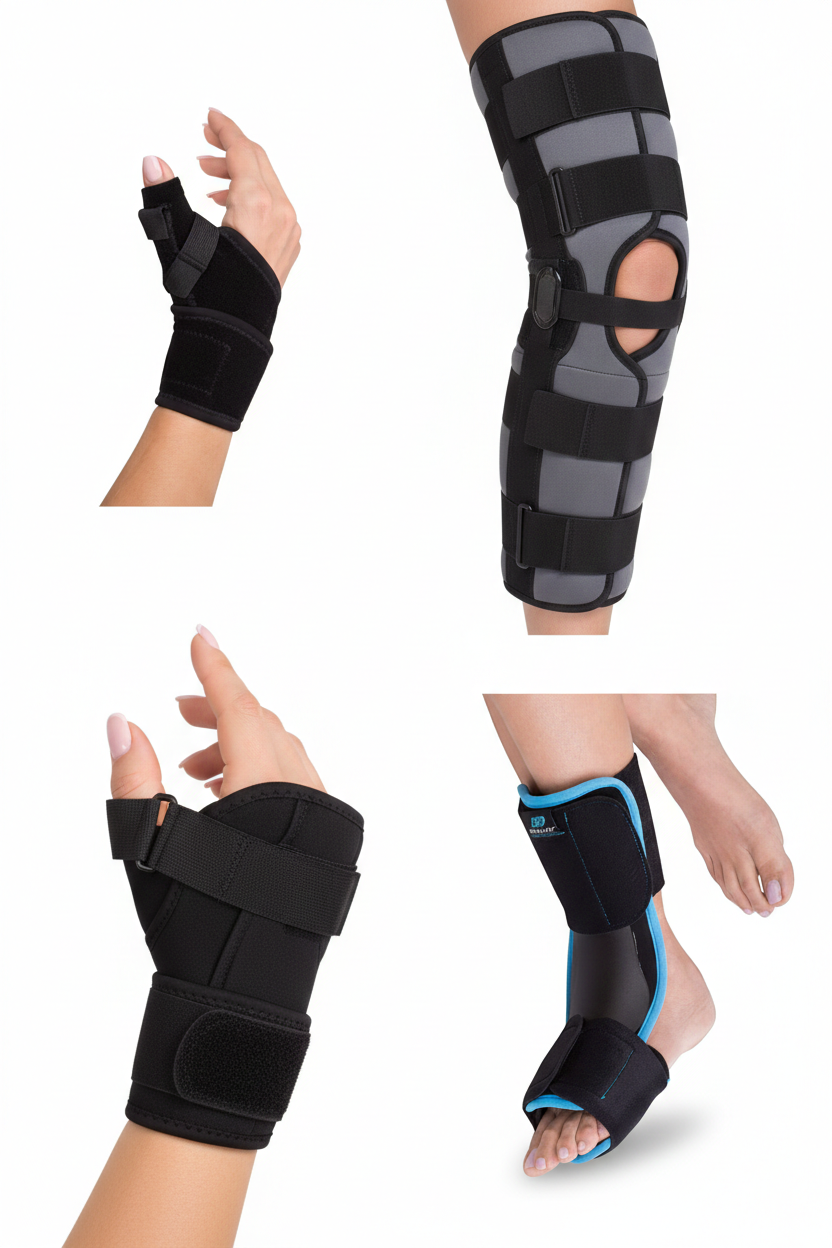
Certain body parts require specially designed splints. A stabilizing thumb splint with wrap-around design provides targeted support for thumb injuries while allowing the rest of the hand to function. Similarly, a knee splint immobilizer keeps the leg completely straight for serious knee injuries or post-surgical recovery.
Night splints serve a unique purpose by maintaining specific positions during sleep. A plantar fasciitis night splint holds the foot in a gentle stretch overnight, reducing morning pain and supporting healing of the plantar fascia.
Common Uses: Splint for Fracture or Sprain
Medical splints are versatile tools used for various injuries and conditions.
Fractures
For broken bones, a splint provides initial stabilization before a cast is applied or during the acute swelling phase. The open design of most splints accommodates swelling better than a closed cast, making them ideal for fresh fractures. Once swelling subsides, healthcare providers may transition to a cast or continue with splint treatment depending on the injury.
Sprains and Strains
Ligament sprains and muscle strains benefit from the support and immobilization that splints provide. By restricting movement, splints allow damaged soft tissues to heal while reducing pain and preventing re-injury during daily activities.
Post-Surgical Support
After certain surgeries, splints protect the surgical site and ensure proper healing by maintaining the correct position and limiting stress on repaired structures.
Chronic Conditions
Conditions like arthritis, tendonitis, and carpal tunnel syndrome often improve with splint use. The support reduces strain on affected areas and can provide relief during flare-ups or specific activities.
Preventive Care
In some cases, splints are used preventively to protect vulnerable joints during activities that might cause injury or to prevent deformities from developing.
When to Use a Medical Splint
Understanding when to use a medical splint is important for proper injury management and recovery.
Immediately after injury: If you suspect a fracture or severe sprain, immobilizing the area with a splint before seeking medical attention can prevent further damage.
During acute swelling: The adjustable nature of splints makes them ideal when swelling is present or expected.
For specific time periods: Some injuries require splinting only during certain activities or times of day, such as night splints for plantar fasciitis or wrist splints worn during computer work.
When mobility is needed: If you need to maintain some function in adjacent joints while protecting an injured area, a splint often allows more flexibility than a cast.
As directed by healthcare providers: Always follow medical advice regarding splint use, duration, and wearing schedule.
Splint vs Cast: Understanding the Difference
Many people wonder about the difference between a splint vs cast when managing injuries.
Splints are typically:
- Partially open, allowing for swelling
- Adjustable and removable
- Used for initial treatment or less severe injuries
- Easier to apply and remove
- More comfortable for some patients
- Suitable for conditions requiring periodic removal
Casts are:
- Completely enclosed and rigid
- Not adjustable once applied
- Used for more serious fractures requiring complete immobilization
- More durable for long-term wear
- Better at preventing any movement
- Not removable by the patient
The choice between a splint and cast depends on the injury type, severity, swelling, and stage of healing. Your healthcare provider will recommend the most appropriate option for your situation.
Benefits of Using a Medical Splint
The advantages of proper splint use extend beyond simple immobilization.
Pain reduction: By limiting movement of injured areas, splints significantly decrease pain levels.
Prevention of further injury: Immobilization protects damaged tissues from additional harm during daily activities.
Proper healing: Maintaining correct alignment ensures bones, ligaments, and tendons heal in the proper position.
Reduced swelling: Support and compression help control inflammation.
Improved function: By stabilizing one area, splints often allow you to maintain function in surrounding joints.
Convenience: Removable splints can be taken off for bathing, skin care, or exercises as directed by healthcare providers.
How to Use a Medical Splint Properly
To maximize the benefits of a splint, proper use is essential. Always apply your splint according to instructions from your healthcare provider or the product guidelines. The splint should feel snug and supportive but not so tight that it causes numbness, tingling, or increased pain.
Check your skin regularly for signs of pressure sores, irritation, or excessive swelling. If you notice any of these issues, adjust the splint or contact your healthcare provider.
Keep the splint clean and dry unless it's specifically designed to be water-resistant. Many splints can be cleaned with a damp cloth, while removable padding may be washable.
Follow your healthcare provider's instructions regarding wearing schedule, whether that's continuous wear, use during specific activities, or only at night.
Conclusion
Medical splints are valuable tools in injury treatment and recovery, offering stabilization, pain relief, and support for proper healing. Whether you're dealing with a fracture, sprain, chronic condition, or post-surgical recovery, understanding how splints work and when to use them empowers you to participate actively in your healing process. By following medical guidance, using the appropriate type of splint for your specific situation, and maintaining proper care, you can optimize your recovery and return to your normal activities with confidence. Remember that while splints are effective management tools, they should always be used as part of a comprehensive treatment plan developed with your healthcare provider.